Same Medication, Different Manufacturer: What Really Changes When You Switch Pharmacies

Photo: pharmacist comparing medication tablets different manufacturers at pharmacy counter, via data.ibtimes.sg
You pick up your monthly refill at a new pharmacy, open the bottle, and pause. The tablet is a different color. It has a slightly chalky taste instead of the smooth coating you've grown accustomed to. Maybe it's smaller, or the shape has changed entirely. Your first instinct may be alarm—but is it warranted?
This experience, sometimes called the "pharmacy shuffle," is far more common than most patients realize, and it sits at the intersection of pharmaceutical manufacturing, insurance formulary management, and the generic drug supply chain. The reassuring news is that most visible differences are cosmetic and carry no clinical consequence. The more nuanced reality is that certain differences can, in specific circumstances, matter significantly.
Why the Same Drug Can Look Completely Different
When a brand-name drug's patent expires, generic manufacturers are permitted to produce their own versions. The U.S. Food and Drug Administration (FDA) requires that generic medications contain the same active ingredient, in the same strength, and deliver that ingredient into the bloodstream at a rate and extent comparable to the original. This standard is known as bioequivalence.
What the FDA does not regulate is the inactive portion of the tablet—the fillers, binders, coatings, dyes, and preservatives collectively referred to as excipients. These ingredients serve functional roles: they give the tablet structural integrity, control how quickly it dissolves, mask unpleasant flavors, and help the pill survive storage conditions. Because no two manufacturers use identical excipient formulas, a 10 mg tablet from one company may look, taste, and feel entirely different from a 10 mg tablet produced by a competitor—even though both meet FDA standards for the active compound.
Pharmacies frequently switch between generic manufacturers based on wholesale pricing, supply availability, and distributor contracts. When your prescription transfers to a new location—or when your existing pharmacy changes its supplier—the pill in your bottle may come from a completely different production facility than the one you received last month.
Cosmetic Differences Versus Clinically Significant Ones
The vast majority of changes patients notice fall into the cosmetic category. A different dye gives the tablet a new color. A different binder changes its texture. A different coating alters the taste. These variations do not affect how the drug behaves in your body, and patients can generally take them with confidence.
However, certain formulations require closer attention. Extended-release and delayed-release medications—those labeled ER, XR, XL, SR, or DR—rely on specific coating technologies or matrix systems to control how the active ingredient is released over time. The excipient composition in these products is not merely cosmetic; it is mechanically essential. If a manufacturer's extended-release mechanism differs from another's, the drug may release faster or slower than expected, potentially affecting both efficacy and side effect profile.
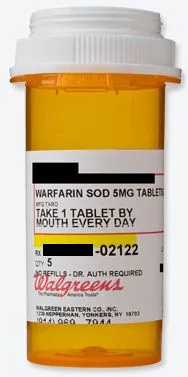
Similarly, medications with a narrow therapeutic index—meaning the gap between an effective dose and a toxic one is small—warrant particular scrutiny when the manufacturer changes. Drugs such as levothyroxine (used to treat thyroid disorders), warfarin (a blood thinner), and certain anti-seizure medications fall into this category. The FDA has specific guidance discouraging automatic substitution among some of these drugs, and many clinicians advise patients to remain on a consistent manufacturer's product once their dosing is stabilized.
When a Change in Appearance Should Prompt a Conversation
Not every visual difference requires clinical follow-up, but several situations justify a direct discussion with your pharmacist or prescriber.
If your medication is extended-release or narrow therapeutic index. Ask your pharmacist explicitly whether the new product comes from the same manufacturer as your previous supply. If it does not, ask whether bioequivalence data specific to that formulation class has been reviewed. For thyroid medications and anticoagulants in particular, request that your prescriber note a preferred manufacturer on your prescription if consistency is medically important.
If you experience new or worsening symptoms after a transfer. A change in how a medication performs—breakthrough symptoms, unexpected side effects, or a sensation that the drug is working differently—may occasionally reflect a meaningful difference in absorption, even when both products are technically bioequivalent. Bioequivalence standards permit an 80–125% range in pharmacokinetic parameters, which is sufficient for most patients but can occasionally be noticeable in individuals who are particularly sensitive to concentration changes.
If the pill you received does not match what is described on your label. Medication errors, including dispensing the wrong product, do occur. The FDA's pill identifier tool and your pharmacist can confirm whether what you received corresponds to the labeled drug and strength.
If you have known allergies or sensitivities to specific dyes or fillers. Certain patients react to specific excipients—FD&C Yellow No. 5 (tartrazine), lactose, or gluten-containing starches, for example. A manufacturer change may introduce an ingredient that was absent from your previous supply. Reviewing the new product's package insert or asking your pharmacist to check the inactive ingredient list is a reasonable precaution.
What Bioequivalence Actually Guarantees—and What It Doesn't
The FDA's bioequivalence standard is scientifically robust and has been validated across decades of post-market surveillance. For the overwhelming majority of medications and patients, a generic substitution—whether at transfer or due to a supplier change—poses no meaningful clinical risk. Studies consistently show that generic drugs perform equivalently to their brand-name counterparts in real-world outcomes.
What bioequivalence does not guarantee is a perfectly identical experience for every individual patient. Human pharmacokinetics vary based on genetics, body composition, gastrointestinal function, and concurrent medications. A product that is statistically equivalent at the population level may feel marginally different to a particular patient, especially for medications where subjective response is part of the therapeutic picture.
Practical Steps for Patients Navigating a Pharmacy Transfer
Before finalizing a transfer, ask your new pharmacy which manufacturer supplies each of your critical medications. Keep a record of the manufacturer names on your current bottles—this information appears on the label or can be provided by your pharmacist. If you are stabilized on a narrow therapeutic index drug, discuss with your prescriber whether specifying a manufacturer on your prescription is appropriate.
If a change does occur and you notice a difference in how the medication is working, document your symptoms with dates and contact your pharmacist or prescribing clinician. Do not discontinue the medication without medical guidance.
Ultimately, the pharmacy shuffle is a routine feature of the modern drug supply system, not a safety failure. Approached with the right questions and a basic understanding of what the differences mean, most patients can navigate manufacturer changes without interruption to their care.