Frozen in Time: How Decades-Old Clinical Trials Still Determine the Dose in Your Prescription Today

Photo: scientist reviewing pharmacogenomics data on computer in medical research laboratory, via images.pexels.com
The prescription your physician writes today—the dose, the frequency, the formulation—rests on a foundation of clinical evidence. What that evidence often does not reflect is you.
For a substantial portion of the drugs currently in routine use across the United States, the dosing parameters embedded in FDA-approved labeling and clinical practice guidelines were established through trials conducted in the 1960s, 1970s, and 1980s. Those trials enrolled populations that were, by contemporary standards, strikingly homogeneous: predominantly white, predominantly male, and weighted toward younger adults. The resulting dose recommendations were then generalized to a far broader population—one that includes women, elderly patients, children, individuals of diverse genetic ancestry, and people with variable organ function—without the benefit of studies specifically designed to evaluate whether the original dose was appropriate for them.
This is not a minor methodological footnote. It is a structural feature of how modern pharmacology was built, and its consequences are still being absorbed by patients and clinicians today.
How a Standard Dose Becomes Standard
Drug dosing is determined during Phase I and Phase II clinical trials, which assess safety, tolerability, and initial efficacy in relatively small populations. The dose that advances to the large Phase III confirmatory trials is typically the one that appeared effective and tolerable in those early studies. Once a drug is approved and a dose is labeled, that figure carries enormous institutional inertia. Prescribers are trained to it, guidelines are built around it, and electronic prescribing systems default to it.
Revising a labeled dose requires post-market data sufficient to compel a regulatory update—a high bar that is rarely cleared absent a prominent safety signal. A dose that produces suboptimal outcomes in a subset of patients, or that works better at a lower concentration in women than in men, does not generate the kind of dramatic adverse event data that triggers formal review. The inadequacy simply persists, distributed invisibly across millions of prescriptions.
The Underrepresentation of Women in Drug Dosing Research
Women were formally excluded from many early clinical trials on the grounds that hormonal variability and the risk of fetal exposure complicated data interpretation. This policy, which persisted under various forms until NIH reforms in the early 1990s required inclusion of women and minorities in federally funded research, left a lasting imprint on the drug dosing literature.
The consequences are well-documented in specific therapeutic areas. Zolpidem, the sedative-hypnotic sold under brand names including Ambien, was prescribed at a standard 10 mg dose for decades before post-market data revealed that women metabolize the drug significantly more slowly than men—resulting in next-morning blood concentrations high enough to impair driving. In 2013, the FDA acted on this evidence and recommended that women be prescribed half the standard dose, 5 mg. The drug had been on the market for more than twenty years at that point.
Cardiovascular pharmacology offers additional examples. Studies have shown that women experience different pharmacokinetic profiles with beta-blockers, ACE inhibitors, and certain antiarrhythmic agents—differences that translate into higher rates of specific adverse effects at standard doses. Women are more likely than men to develop drug-induced long QT syndrome, a cardiac rhythm abnormality associated with several commonly prescribed medications, partly because baseline QT intervals differ by sex and partly because drug metabolism differs as well.
Age, Organ Function, and the Dosing Assumptions That Don't Hold
Standard doses are calibrated, in large part, against the physiology of young to middle-aged adults with intact kidney and liver function. As patients age, renal clearance declines, hepatic metabolism slows, body composition shifts, and the proportion of body water to fat changes—all of which alter how drugs are distributed, metabolized, and eliminated.
Despite this, many elderly patients receive doses derived from studies that excluded individuals over 65. The result is predictable: higher rates of adverse drug reactions in older adults, more frequent hospitalizations attributable to drug toxicity, and a pattern of overprescribing that the geriatric medicine field has spent decades working to correct. Tools such as the Beers Criteria, maintained by the American Geriatrics Society, identify medications that are potentially inappropriate in older adults—but awareness of these tools is uneven across clinical settings, and application is inconsistent.
Renal and hepatic dosing adjustments are available for many drugs, but they require clinicians to calculate or look them up and apply them proactively. In busy practice settings, standard doses are often prescribed without individualized adjustment, particularly for patients with mild-to-moderate organ impairment that may not be prominently flagged in the medical record.
The Pharmacogenomic Dimension
Perhaps the most rapidly evolving challenge to standardized dosing comes from pharmacogenomics—the study of how genetic variation affects individual drug response. Enzymes in the liver, particularly those in the cytochrome P450 family, are responsible for metabolizing a large proportion of commonly prescribed medications. Genetic variants in the genes encoding these enzymes create distinct metabolizer phenotypes: poor metabolizers who process drugs slowly and accumulate higher concentrations, and ultrarapid metabolizers who clear drugs so quickly that standard doses produce subtherapeutic effects.
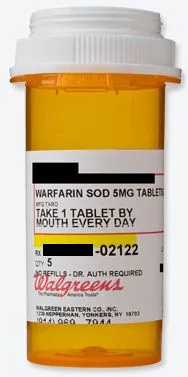
These variants are not rare. Clinically significant polymorphisms in CYP2C19, CYP2D6, and CYP2C9 affect tens of millions of Americans. The antidepressant citalopram, the antiplatelet drug clopidogrel, the opioid codeine, and the blood thinner warfarin are among the many drugs whose efficacy and safety are substantially influenced by these genetic differences. Pharmacogenomic testing is commercially available, increasingly covered by insurance for specific indications, and endorsed by clinical guidelines in oncology, psychiatry, and cardiology—yet its integration into routine prescribing remains limited.
The Clinical Pharmacogenomics Implementation Consortium (CPIC) publishes guidelines that translate pharmacogenomic data into specific dosing recommendations. These guidelines exist precisely because the standard doses encoded in labeling do not account for genetic variation. The gap between what CPIC recommends and what most patients receive reflects the pace at which new science reaches everyday clinical practice.
What Patients Can Do
Navigating the distance between population-level dosing and individual need requires both information and advocacy. Several practical steps are available to patients who wish to engage more actively in this dimension of their care.
Request a medication review that accounts for your specific characteristics. Inform your prescriber of any relevant factors—age-related changes in kidney function, a history of unusual drug sensitivity, family history of adverse reactions to specific medications—that may bear on whether a standard dose is appropriate for you.
Ask about pharmacogenomic testing. For patients on medications with known pharmacogenomic relevance—particularly antidepressants, antipsychotics, pain medications, anticoagulants, or antiplatelet agents—a conversation about whether genotype-guided dosing is appropriate is entirely reasonable. Some health systems and specialty clinics offer this testing as part of clinical care.
Track your response and report it accurately. If a medication appears to be working poorly, producing excessive side effects at the labeled dose, or requiring unusually frequent adjustment, document that pattern and share it with your prescriber. Suboptimal response at a standard dose is clinically meaningful information.
Consult a clinical pharmacist. Clinical pharmacists, particularly those with training in pharmacogenomics or geriatric pharmacology, are equipped to evaluate whether your current regimen reflects individualized dosing considerations. Many health systems offer pharmacist consultations as a billable service.
The standard dose on your prescription label represents a starting point derived from population-level data. For many patients, it is also the right dose. But for a significant minority—defined by sex, age, organ function, or genetic makeup—it may be too high, too low, or suboptimally timed. The science to identify those patients more precisely exists. The challenge is ensuring that science reaches the prescription before the patient experiences its absence.