Hidden Hazards in Your Medicine Cabinet: The Supplement-Drug Interactions Your Doctor May Never Mention

Photo by Photo by Pawel Czerwinski on Unsplash on Unsplash
Walk into almost any American home and you will find them: amber bottles of fish oil, gummy multivitamins, capsules of turmeric, and perhaps a container of melatonin tucked beside the alarm clock. The supplement industry in the United States generates more than $50 billion annually, and surveys consistently show that more than half of American adults take at least one dietary supplement regularly. What far fewer people realize is that many of these products—sold freely on drugstore shelves and marketed as natural health boosters—can interact with prescription medications in ways that range from mildly inconvenient to genuinely dangerous.
Perhaps more troubling: the majority of patients never tell their doctors or pharmacists what supplements they take. And many physicians, pressed for time during brief office visits, simply do not ask.
Why the Gap Exists
The disconnect between supplement use and medical oversight is not a matter of bad intentions on either side. Patients often assume that because a product is available without a prescription and labeled as "natural," it poses no meaningful medical risk. Physicians, meanwhile, may lack formal training in supplement pharmacology—a field that receives limited coverage in most medical school curricula. The result is a significant blind spot in the standard of care.
Dietary supplements are regulated by the Food and Drug Administration under the Dietary Supplement Health and Education Act of 1994, a framework that does not require manufacturers to prove safety or efficacy before bringing a product to market. This regulatory distinction from pharmaceutical drugs means that interaction data is often sparse, inconsistently reported, and slower to reach clinical guidelines.
Pharmacists, who receive more direct training in pharmacokinetics and drug interactions, are frequently the last line of defense—but only if patients disclose what they are taking.
The Science Behind the Interactions
Understanding why supplements can interfere with medications requires a brief look at how the body processes drugs. Most orally administered medications are metabolized by a family of liver enzymes known as cytochrome P450 (CYP450). Many supplements either inhibit or induce these enzymes, meaning they can slow or accelerate the breakdown of prescription drugs.
When a supplement induces CYP450 activity, it causes the body to process a medication faster than intended, potentially reducing its effectiveness to subtherapeutic levels. Conversely, when a supplement inhibits these enzymes, drug concentrations in the bloodstream can rise above safe levels, increasing the risk of toxicity.
Other interactions occur through pharmacodynamic mechanisms—where two substances produce overlapping or opposing physiological effects—rather than through metabolism alone.
High-Risk Combinations Every Patient Should Know
St. John's Wort and Antidepressants, Birth Control, or HIV Medications
St. John's Wort (Hypericum perforatum) is among the most extensively studied—and most hazardous—supplement-drug interactions documented in medical literature. A potent inducer of CYP3A4 and P-glycoprotein, this widely used herbal remedy can reduce the plasma concentrations of numerous medications, including selective serotonin reuptake inhibitors (SSRIs), oral contraceptives, cyclosporine, and antiretroviral drugs used to manage HIV.
A patient taking sertraline for depression who adds St. John's Wort to their regimen may experience a paradoxical worsening of symptoms as the herb accelerates drug clearance. Additionally, combining St. John's Wort with serotonergic medications raises the risk of serotonin syndrome—a potentially fatal condition characterized by agitation, rapid heart rate, high fever, and muscle rigidity.
Fish Oil and Blood Thinners
Omega-3 fatty acids, found in fish oil supplements, have demonstrated antiplatelet properties in clinical research. For most people, this effect is modest. However, for patients taking warfarin, clopidogrel, or other anticoagulant medications, adding high-dose fish oil can meaningfully increase bleeding risk. Patients recovering from surgery or managing conditions such as atrial fibrillation should discuss fish oil use explicitly with their prescribing physician before continuing or initiating supplementation.
Calcium and Certain Antibiotics or Thyroid Medications
Calcium supplements, taken routinely by millions of Americans for bone health, can bind to certain medications in the gastrointestinal tract—physically preventing their absorption. This chelation effect is particularly significant with fluoroquinolone antibiotics (such as ciprofloxacin) and levothyroxine, the most commonly prescribed thyroid medication in the country. Patients taking levothyroxine are typically advised to take it on an empty stomach, separated from calcium by at least four hours. Failing to observe this timing can result in undertreated hypothyroidism even when the prescription appears to be filled correctly.
Vitamin K and Warfarin
Warfarin's therapeutic effect depends on inhibiting vitamin K-dependent clotting factors. Patients on warfarin are advised to maintain consistent dietary vitamin K intake, but supplements containing high doses of vitamin K—including certain multivitamins and green superfood powders—can directly counteract the medication's anticoagulant properties. Erratic supplement use in this population makes INR monitoring unreliable and increases stroke risk.
Ginkgo Biloba and Blood Thinners or Seizure Medications
Marketed for cognitive support and memory, ginkgo biloba has antiplatelet properties similar to fish oil and can compound bleeding risk in patients on anticoagulants. It has also been associated with reducing the effectiveness of anticonvulsant drugs, including valproic acid, raising seizure threshold concerns for patients with epilepsy.
Real-World Consequences
Consider a scenario documented repeatedly in clinical pharmacy literature: a patient managing a heart transplant with cyclosporine begins taking St. John's Wort, believing it will help with post-surgical depression. Within weeks, cyclosporine levels fall below therapeutic range, and organ rejection becomes a serious risk. The patient had not thought to mention the supplement, and the transplant team had not asked.
Or consider the more common presentation: a woman taking oral contraceptives for both family planning and endometriosis management begins a St. John's Wort regimen she found recommended in a wellness blog. Months later, she discovers an unintended pregnancy. The interaction, though well-documented in pharmacological literature, was never communicated at the point of sale.
These are not rare events. They are predictable outcomes of a system in which supplement use is normalized and medical disclosure is incomplete.
How to Have the Conversation
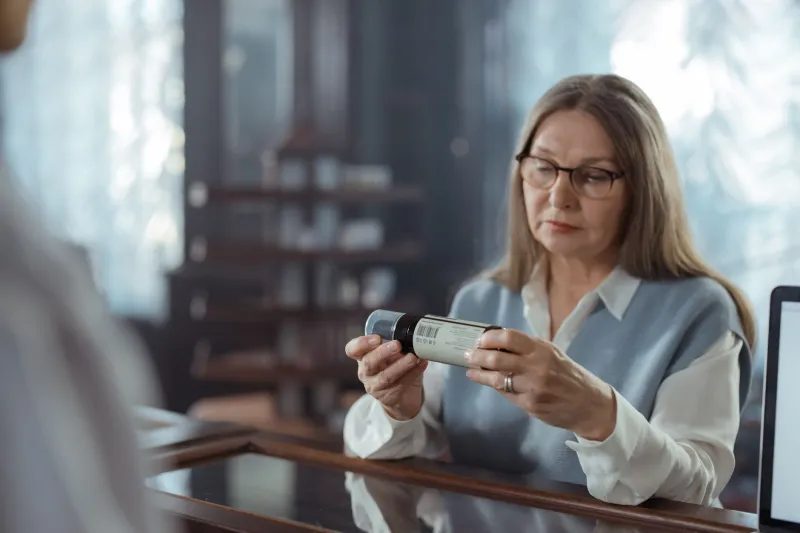
The most effective intervention is straightforward: tell your pharmacist everything you take. This includes vitamins, minerals, protein powders, herbal teas consumed regularly, and any products labeled as "natural" or "wellness-focused." Pharmacists have access to interaction-checking databases and are trained specifically to identify these risks.
Before your next medical appointment or pharmacy visit, prepare a complete list of your supplements—including brand names, doses, and how frequently you take them. Many pharmacists recommend bringing the actual bottles. When starting a new prescription, ask directly: "Are there any supplements I currently take that I should be concerned about with this medication?"
Patients who use online pharmacy services or mail-order prescriptions should take particular care, as the face-to-face interaction that might prompt a disclosure conversation is absent in these settings.
The Bottom Line
Natural does not mean safe, and common does not mean harmless. The supplement-drug interaction landscape is complex, evolving, and frequently underestimated by patients and clinicians alike. At LaceyUS Pharma, we believe that informed patients make safer decisions—and that begins with understanding that everything you put into your body, prescription or otherwise, has the potential to interact with something else.
Your pharmacist is your most accessible resource for this conversation. Use that resource before an interaction uses you.