Hidden on Your Plate: How Common Foods Silently Undermine Your Medications
Most patients receive a printed leaflet when they pick up a prescription. Most patients fold that leaflet and discard it without reading it. Buried within those pages—often in language dense enough to discourage even the most diligent reader—is information that could meaningfully affect whether a medication works, or whether it causes harm. Among the most underappreciated warnings in modern pharmacology is the interaction between food and drugs.
This is not a fringe concern. The U.S. Food and Drug Administration has documented hundreds of clinically significant food-drug interactions, and researchers estimate that a substantial portion of treatment failures and adverse events in outpatient settings are linked, at least in part, to what patients consumed around the time they took their medication. The problem is both common and correctable—provided patients understand what they are dealing with.
The Grapefruit Problem: More Than a Quirky Warning Label
No food-drug interaction has received more attention than grapefruit, yet surveys consistently show that most patients either do not know about it or do not take it seriously. The mechanism is worth understanding in detail, because it illustrates a broader principle about how the body processes drugs.
Grapefruit—along with Seville oranges, pomelos, and tangelos—contains compounds called furanocoumarins. These naturally occurring chemicals inhibit an enzyme in the small intestine known as CYP3A4, which is responsible for metabolizing a wide range of medications before they enter the bloodstream. When CYP3A4 is suppressed, the body absorbs far more of the drug than intended. Depending on the medication, this can mean blood levels two, three, or even five times higher than what the prescribing physician anticipated.
The clinical consequences are not trivial. Statins such as atorvastatin and simvastatin, when taken alongside grapefruit juice, can reach concentrations associated with muscle breakdown—a serious condition called rhabdomyolysis. Certain calcium channel blockers used to manage hypertension can cause a dangerous drop in blood pressure. Some immunosuppressants taken by transplant patients can reach toxic levels. The interaction is not dose-dependent in the way most patients assume; even a single glass of grapefruit juice consumed hours before a medication can blunt enzyme activity for up to 72 hours.
Calcium, Iron, and the Antibiotic That Cannot Get Through
Grapefruit may be the most publicized offender, but it is far from the only one. Calcium-rich foods present a different but equally significant problem for certain antibiotic classes, particularly fluoroquinolones (such as ciprofloxacin) and tetracyclines (such as doxycycline).
These antibiotics bind tightly to divalent cations—positively charged mineral ions including calcium, magnesium, iron, and zinc—through a chemical process called chelation. When chelation occurs in the gastrointestinal tract, the resulting compound is too large and poorly soluble to be absorbed efficiently. The practical result: a patient taking ciprofloxacin with a glass of milk or a calcium-fortified orange juice may absorb as little as half the intended dose of the antibiotic. For a serious infection, that reduction in bioavailability is not a minor inconvenience—it is a meaningful impediment to treatment.
Iron supplements compound this issue. Patients taking thyroid hormone replacement (levothyroxine) are frequently advised to take the medication on an empty stomach in the morning, yet many unknowingly take iron supplements or consume iron-fortified cereals within the same hour. Iron chelates with levothyroxine in a manner similar to what occurs with antibiotics, significantly reducing absorption and leaving patients undertreated for hypothyroidism.
High-Fat Meals: When Food Becomes an Amplifier
Not all food-drug interactions work by reducing medication absorption. Some foods dramatically increase it—and not always safely. High-fat meals are a notable example.
Certain medications are specifically formulated to be taken with food to improve tolerability, but the type of food matters considerably. The antiretroviral drug rilpivirine, used in HIV treatment, requires a meal of at least 500 calories to achieve adequate absorption—a protein-rich snack is insufficient. Conversely, the antifungal agent itraconazole, when taken in capsule form, requires a high-fat meal for optimal absorption, whereas its oral solution performs better on an empty stomach. The distinction between formulations is clinically meaningful, and many patients are unaware that switching between a capsule and a liquid version of the same drug changes the dietary instructions entirely.
High-fat meals also slow gastric emptying, which affects the rate at which extended-release formulations release their active ingredients. For medications with narrow therapeutic windows—meaning the gap between an effective dose and a toxic dose is small—this variability in absorption timing can have real consequences.
Vitamin K and Warfarin: A Classic Interaction Still Causing Problems
Among the most well-documented and persistently problematic food-drug interactions is the relationship between warfarin (a blood thinner widely prescribed to prevent clots) and foods rich in vitamin K. Warfarin works by inhibiting the synthesis of vitamin K-dependent clotting factors. When a patient suddenly increases their intake of leafy green vegetables—kale, spinach, collard greens, Brussels sprouts—they introduce more vitamin K into their system, which partially counteracts the drug's effect and can allow dangerous clot formation.
The reverse is equally dangerous. A patient who dramatically reduces their vegetable intake—perhaps due to illness or a dietary change—may find that warfarin's effect is amplified, increasing the risk of bleeding. The key message from clinicians is not that patients on warfarin should avoid vitamin K-rich foods entirely, but that they should maintain consistency. Dramatic swings in dietary vitamin K intake are what destabilize anticoagulation therapy.
A Practical Framework for Timing Meals and Medications
Given the complexity of food-drug interactions, patients benefit from a structured approach rather than attempting to memorize every specific pairing. The following principles provide a useful starting framework:
- Read the label—and the full information sheet. Instructions such as "take on an empty stomach" or "avoid dairy products" are not arbitrary. They reflect pharmacokinetic data that directly affects how the drug performs in your body.
- Define what "empty stomach" means. Generally, this means at least one hour before eating or two hours after a meal. When in doubt, ask your pharmacist for clarification.
- Be cautious with supplements. Herbal preparations and over-the-counter supplements are not inert. St. John's Wort, for instance, is a potent inducer of CYP3A4—the same enzyme that grapefruit inhibits—and can reduce blood levels of medications including certain oral contraceptives and antiretrovirals.
- Alcohol deserves special attention. Alcohol interacts with dozens of medications, ranging from sedatives and opioids (where the combination can cause respiratory depression) to metronidazole (where it produces a deeply unpleasant flushing reaction) to acetaminophen (where chronic use combined with heavy drinking elevates the risk of liver damage).
- Inform your pharmacist of dietary habits. If you consume large amounts of a specific food—grapefruit daily, green tea with every meal, or a high-protein diet—this information is clinically relevant and should be part of your medication review.
The Conversation Worth Having
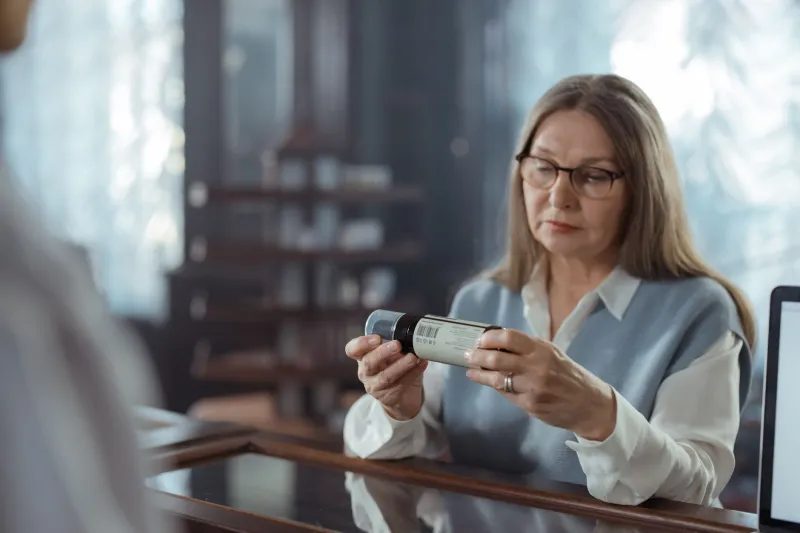
Food-drug interactions occupy an uncomfortable middle ground in patient education: they are well-established in the pharmacological literature, yet they receive insufficient emphasis in the clinical encounter. A physician prescribing a new medication may have only minutes to cover the essentials. The pharmacist, often the last healthcare professional a patient speaks with before beginning a new therapy, is frequently the most accessible resource for this kind of practical guidance.
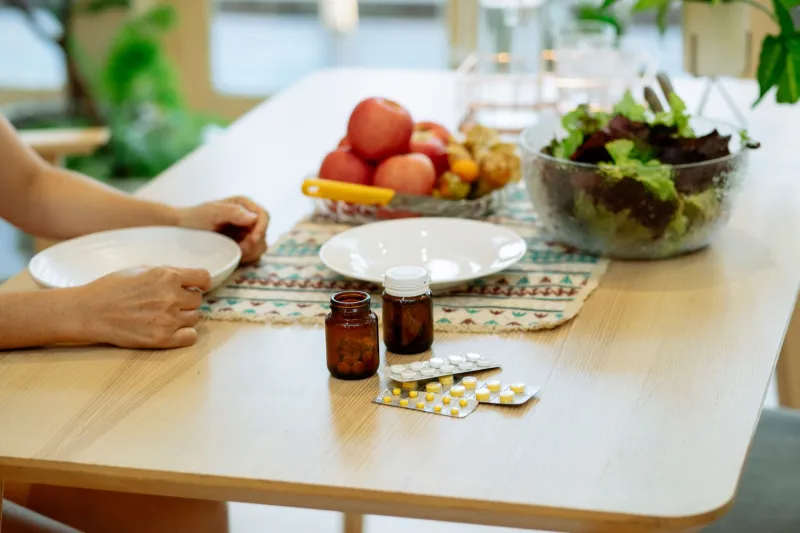
Patients who take an active role in understanding what they eat and when they eat it—relative to their medication schedule—are better positioned to achieve the outcomes their treatment is designed to deliver. The plate and the pill bottle are not unrelated. For anyone managing their health with prescription or over-the-counter medications, treating them as part of the same system is not optional. It is essential.